Five friends in a cafe
The idea was simple: use robotics and AI to clean beaches autonomously, protecting ecosystems while freeing people from repetitive manual work. The long-term vision was bigger: start with coastlines, then move to cities, giving people in these jobs the chance to find more fulfilling paths.
We spent nearly five full days at a cafe in central Eindhoven hashing out every detail. Architecture, feasibility, team structure, funding strategy. By the end of it we had a proposal detailed enough to pitch.
We went to our first official meeting with TU/e and Innovation Space. They were blown away by the depth of planning. We were given financial support on the spot, and a few weeks later, our own office in a prime location on the TU/e campus.
From 5 to 30
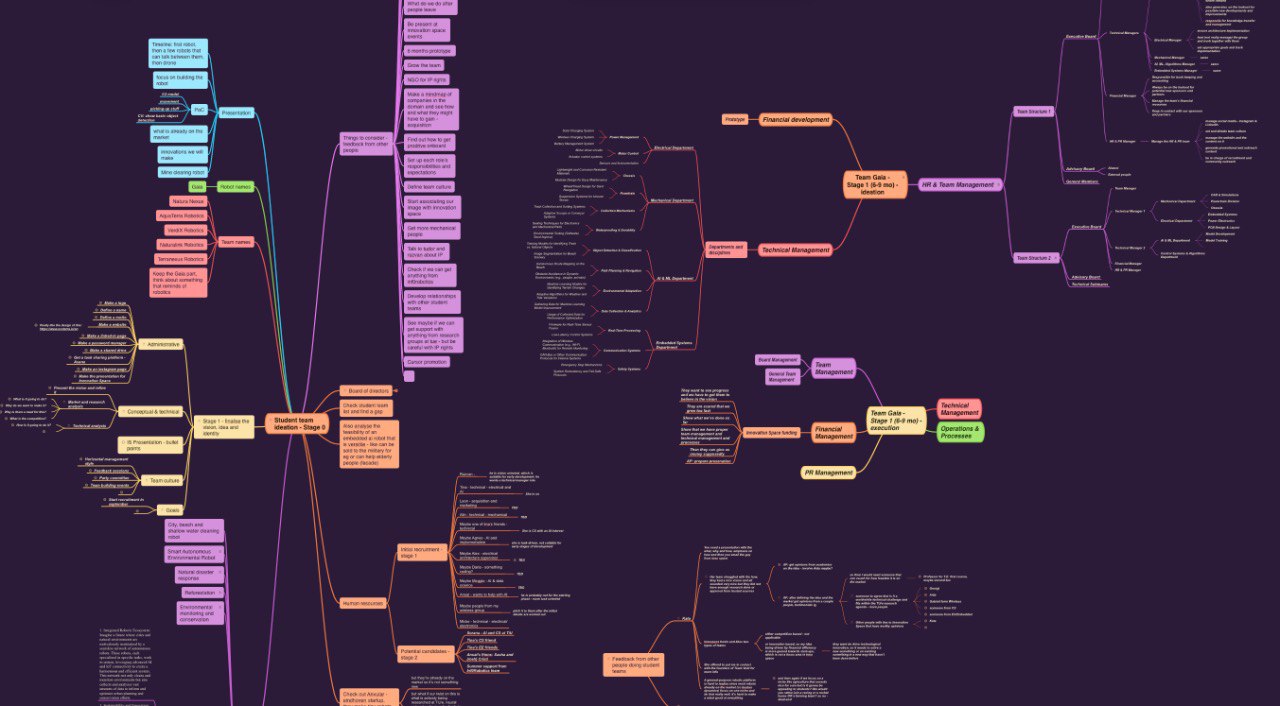
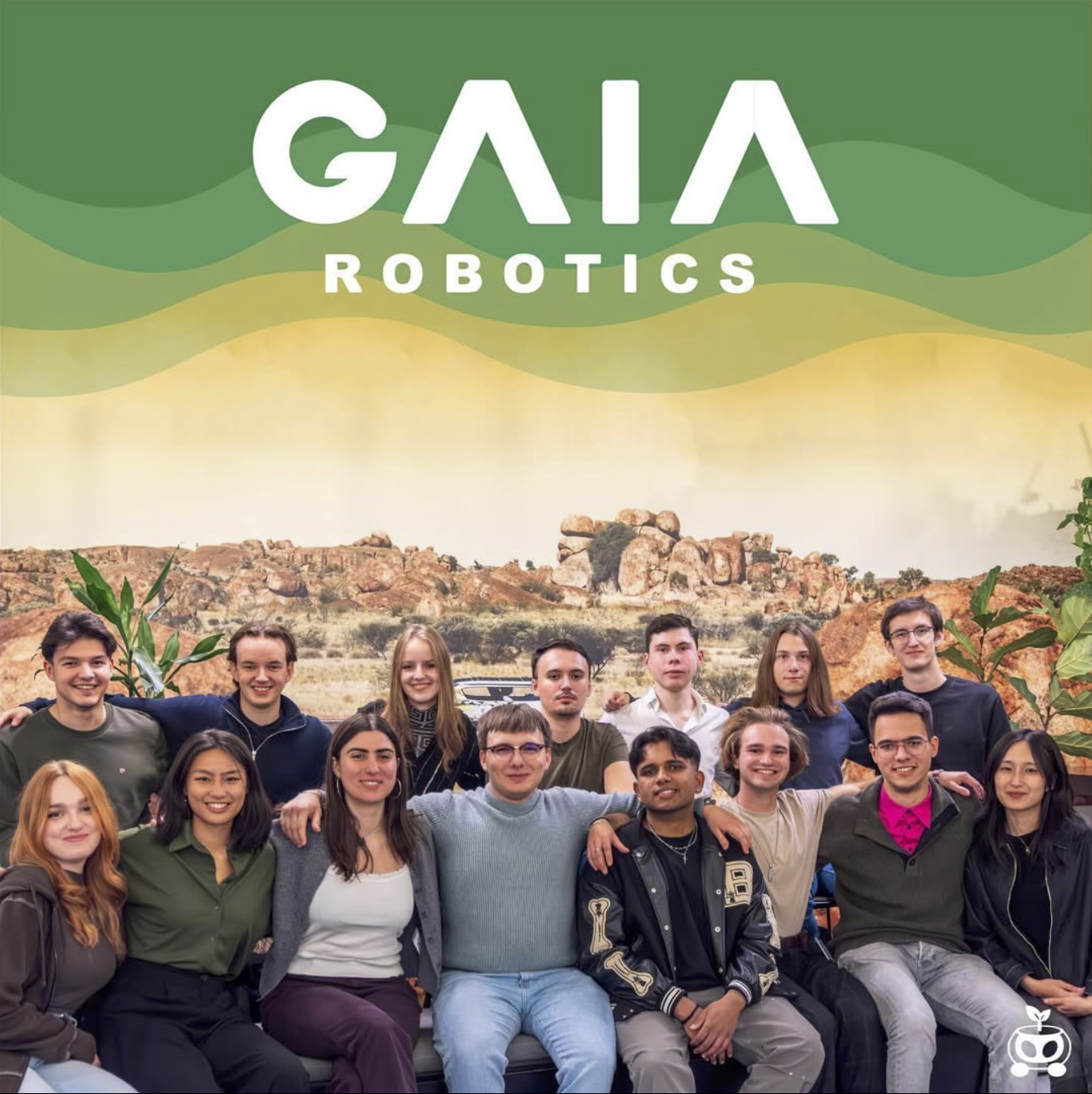
Word spread fast. Within six months we grew from 5 co-founders to over 30 members across 6 faculties and 7 nationalities. Team Gaia became one of TU/e's fastest-growing student teams, attracting people from electrical engineering, computer science, mechanical engineering, industrial design, and more.
I organized the team into three departments: Electrical, Mechanical, and AI. Each had its own lead, its own roadmap, and clear interface contracts between them. The management structure I'd learned from student government scaled directly into technical team leadership.
Learning everything from scratch
I knew how to organize, manage, and sell. But I had no idea how to build a robot. So I started consuming knowledge as fast as I could: reading papers, datasheets, and reference designs. Talking to anyone knowledgeable in robotics, AI, drive systems, power electronics, embedded software. Every conversation was a crash course.
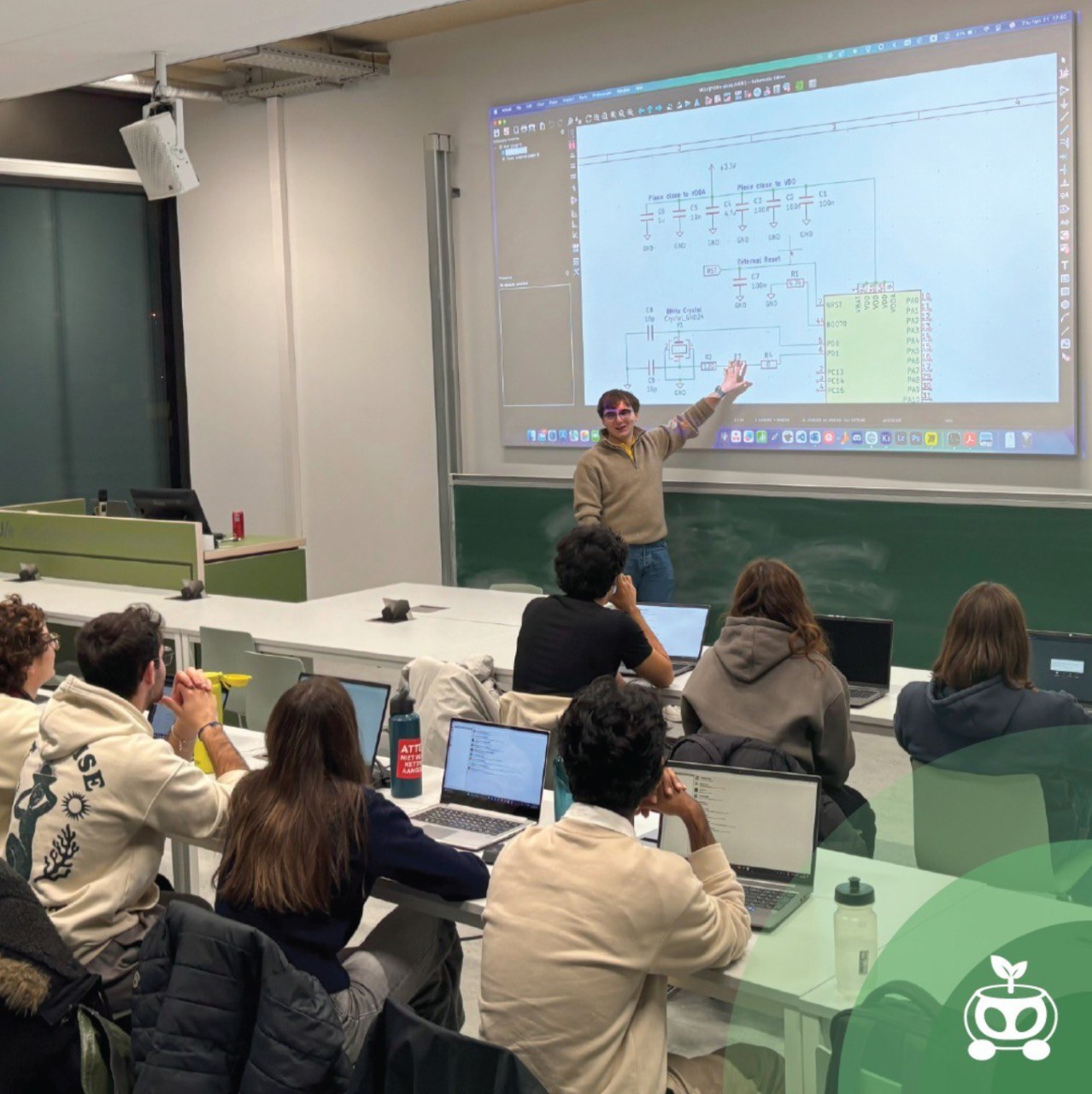
And then I started teaching it back. I ran PCB training sessions for the team, walking through schematic design in KiCad, explaining power regulation circuits and CAN bus protocols. The philosophy was simple: if I learn something, the team learns it too.
What we built
CASTUS is a fully autonomous robot designed for coastal environmental monitoring and cleaning in harsh outdoor conditions: saltwater, sand, wind. The system architecture spans custom hardware, real-time embedded software, and edge AI.
Compute
NVIDIA Jetson Orin NX for AI inference, STM32H7 microcontrollers for real-time control.
Power
4 custom PCBs (4/8-layer, 60V): BMS, BLDC controller, solar charge controller, power distribution.
Perception
TinyYOLO + R-CNN pipeline. 250 field samples, 15 classes. 93% accuracy, 0.87 F1, 30 FPS.
Comms
CAN bus network linking all subsystems. ROS 2 software stack for autonomy and sensor fusion.
Environment
Designed for saltwater, sand, and wind. 30 min autonomous operation demonstrated.
Partners
Partnerships with WWF and industry sponsors. Supported by TU/e Innovation Space.
Proving it in the sand
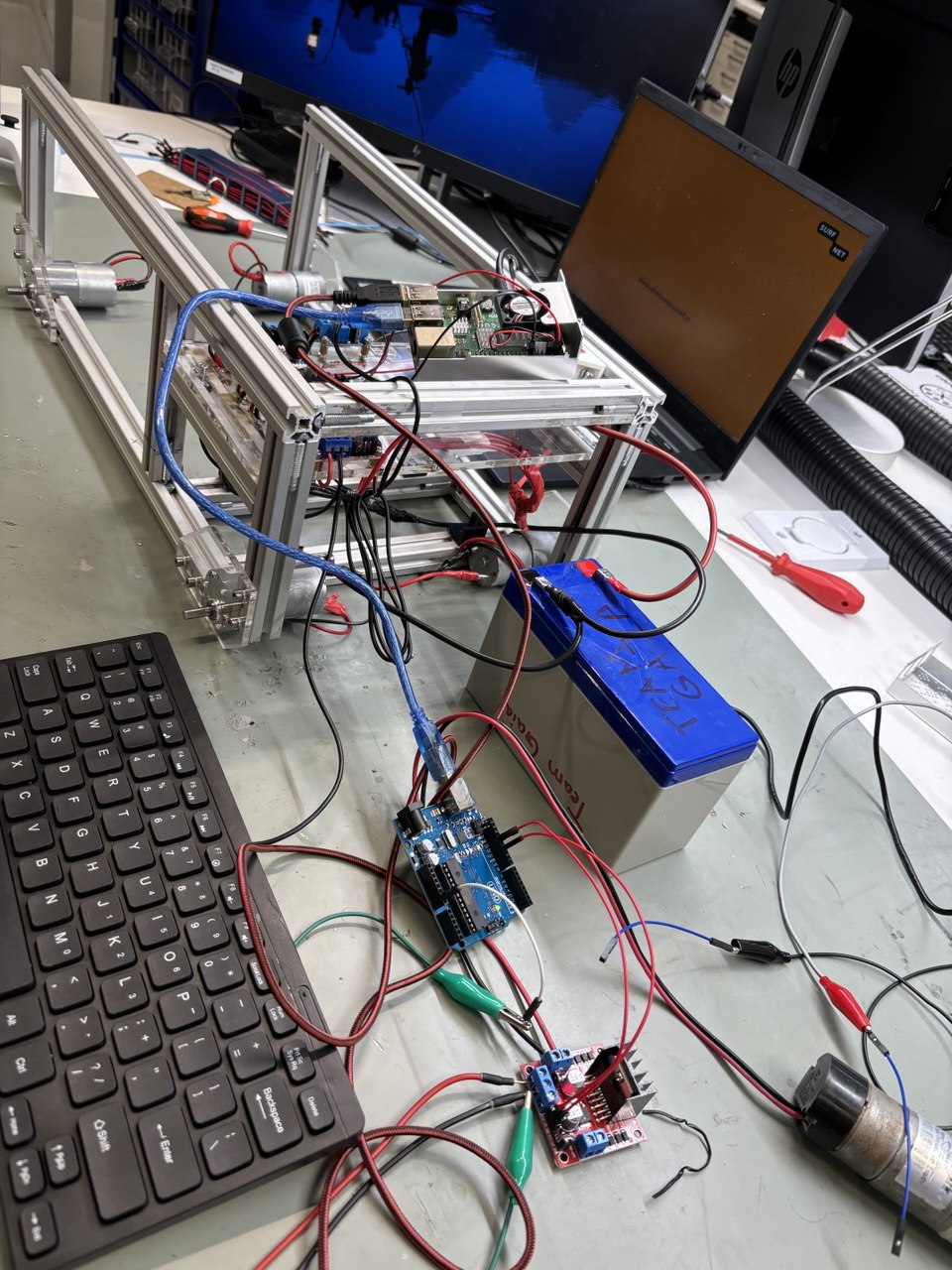
A robot designed for the coast has to earn its confidence on loose terrain. We used a controlled sand testbed to validate CASTUS's drivetrain and mechanical integration before taking the system into less forgiving environments.
The test captures the work in its most honest form: a modular aluminium-frame prototype, exposed electronics, large treaded wheels, and repeated runs through soft sand. It let us observe traction, turning behaviour, wheel-terrain interaction, and how the assembled system behaved as one machine.
Showing the world
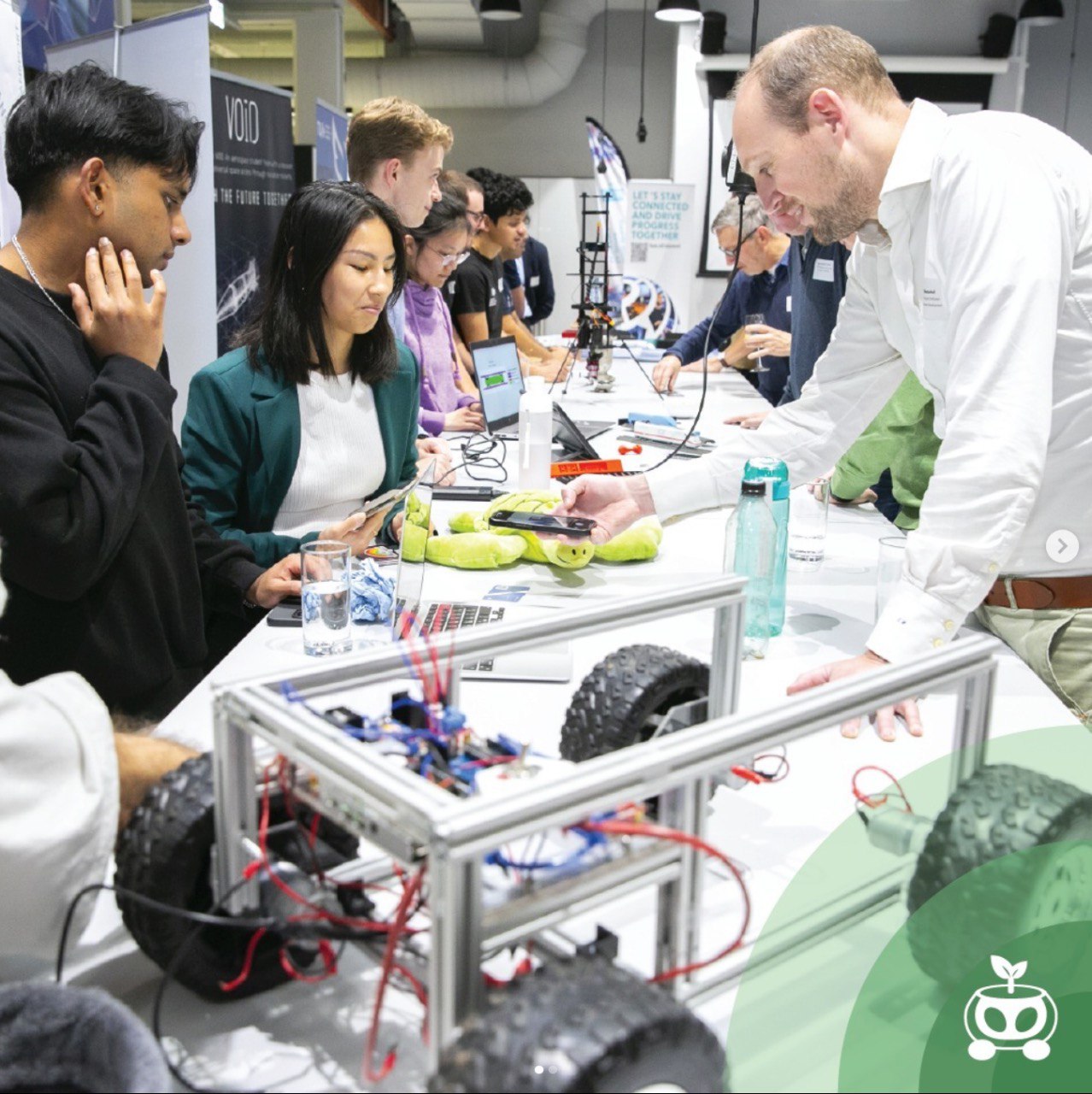
We demoed CASTUS at the Innovation Space Alumni Night, pitching to an audience of alumni, industry contacts, and university leadership. Visitors explored our AI image recognition system running live and got hands-on with the prototype. It was a turning point: after that event, recruitment and partnership inquiries accelerated.
What I took from it
Team Gaia was the hardest thing I've done. Not because of the technology, though that was hard too, but because of the human side. Aligning 30 people across disciplines, keeping momentum through setbacks, making decisions when there's no playbook. Every week was a new problem I'd never faced before.
I went in knowing how to lead but not how to build. I came out knowing both. The technical skills (PCB design, embedded systems, ROS, edge AI) were real and hard-won. But the deeper lesson was about learning velocity: when you need to build something that doesn't exist yet, the most important skill is how fast you can learn what you don't know.
In June 2025, I got the opportunity to move to Zürich for my Master's at ETH. That meant leaving Gaia behind. I transitioned to Advisory Board Chair and handed the reins to Tudor Manta and Leon, two of my co-founders and now the co-leads. I could not have done any of this without them, and I'm lucky that they chose to carry the project forward. I have full belief that they will push the boundaries of what's possible and take CASTUS to even greater heights.
For me personally, this experience taught me more than I can put into words. How to build technology from zero. How to learn faster than the problems come at you. How to trust people and let go.